There are homes that appear complete on the surface-clean walls, neutral furniture, carefully chosen objects-yet still feel emotionally unsettled. In these spaces, what’s missing is rarely more decoration. It is usually a sense of calm connection. This is where Japandi wall decor quietly enters, not merely to fill a void, but to soften and steady the atmosphere.
Rather than drawing attention to itself, Japandi inspired decor works in the background. It supports daily routines, adds warmth without visual noise, and brings intention without excess.In the world of Chicnchill, wall decor is not about chasing trends; it is a vital part of a slow and mindful lifestyle-where the essence of balance outweighs the need for display.
Understanding japandi interior style: the fusion of two worlds
To understand why Japandi home decor has become a cornerstone of modern interior design, one must look at its roots. Japandi interior style is the harmonious meeting point of two distinct yet deeply compatible philosophies: Japanese Wabi-sabi and Scandinavian Hygge.
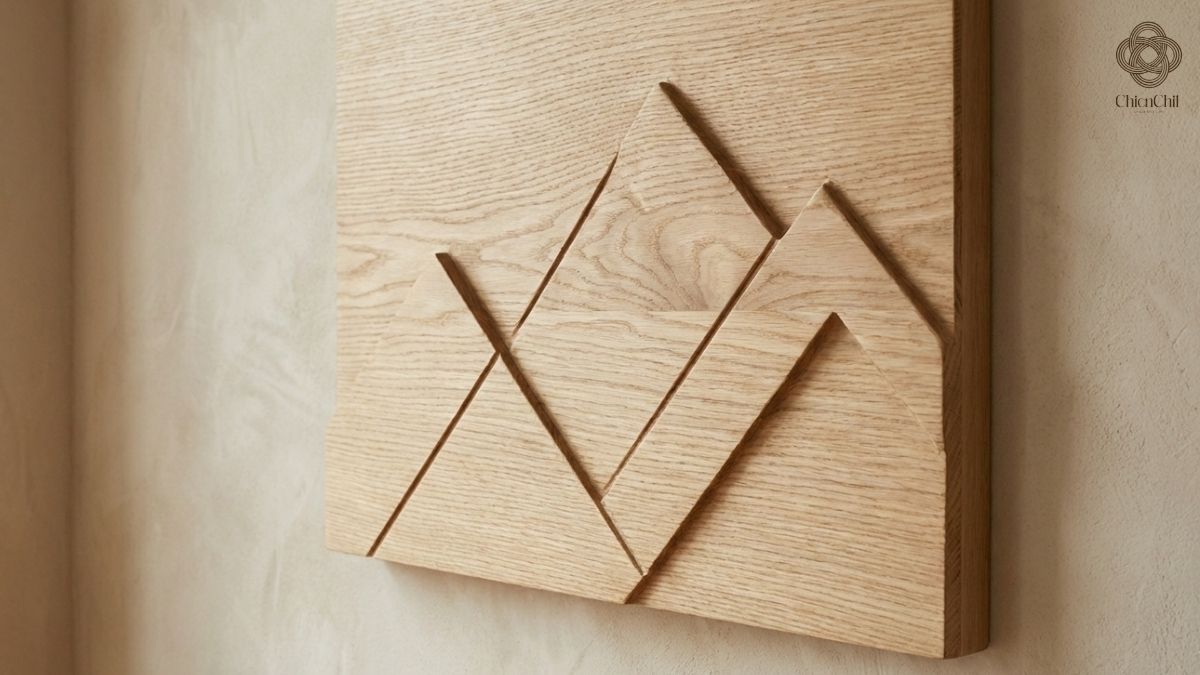
From Japan comes mindfulness, simplicity, and a profound respect for imperfection. From Scandinavia comes the concept of warmth, functionality, and everyday comfort. On your walls, this fusion manifests through restraint. Forms remain uncomplicated, and colors stay grounded in nature.
Choosing minimalist wall decor within this style means embracing the idea that "less is more." It suggests that a few thoughtful elements can create more balance than walls filled with clutter. In a Japandi-inspired home, space itself becomes a vital part of the design, allowing the room-and the people within it-to breathe.
The emotional value of wall decor for calm living
Modern homes rarely serve a single purpose anymore. They are sanctuaries where we rest, work, reflect, and reconnect. Decor that is visually loud or overly curated can disrupt this delicate rhythm. This is why wall decor for calm living has shifted from a luxury to a necessity.
When walls ask for calm rather than decoration, minimalist handmade art becomes the perfect solution. This shift reflects a broader lifestyle change: choosing fewer objects but selecting them with greater care. This type of decor does not compete for your attention. Instead, it gently supports the mood of a room, helping it feel emotionally finished and grounded.
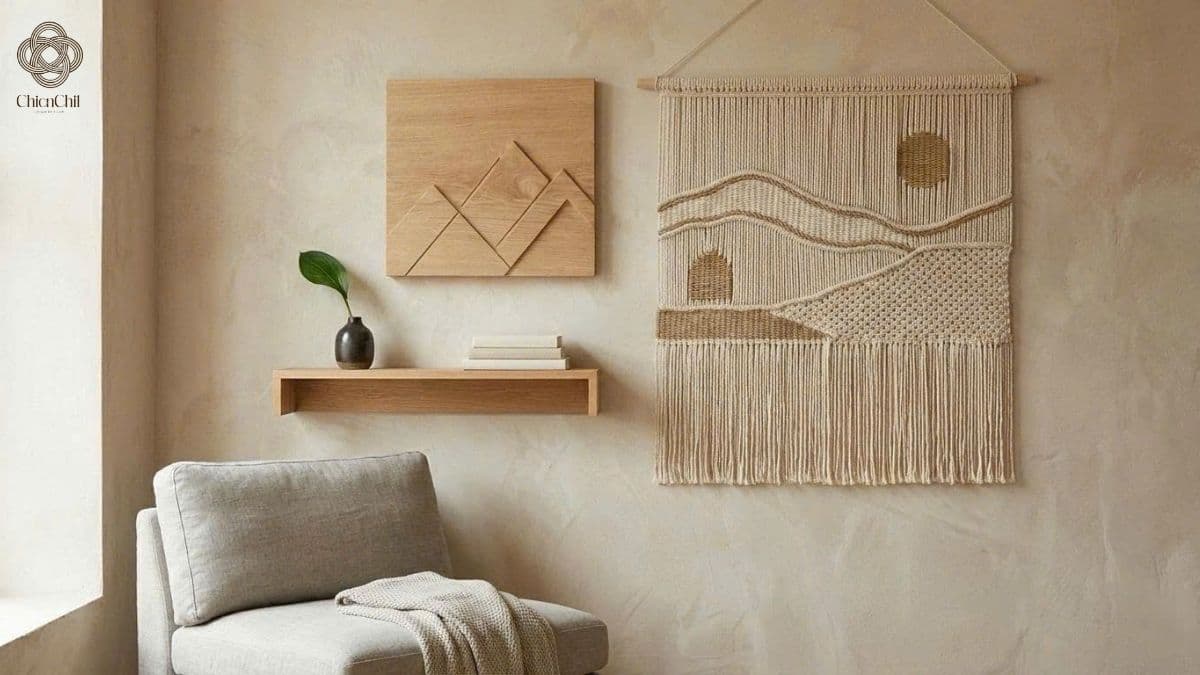
In Chicnchill-curated interiors, we often see that the most impactful pieces are those that evoke a sense of serenity. Whether it’s a woven hanging or a simple wooden frame, natural wall decor acts as a visual anchor, pulling the room together into a cohesive, peaceful whole.
Materials matter: the soul of natural wall decor
At the heart of Japandi wall decor is a deep connection to the earth. The materials used are often untreated or minimally finished to allow their true character to shine through. Common elements include:
-
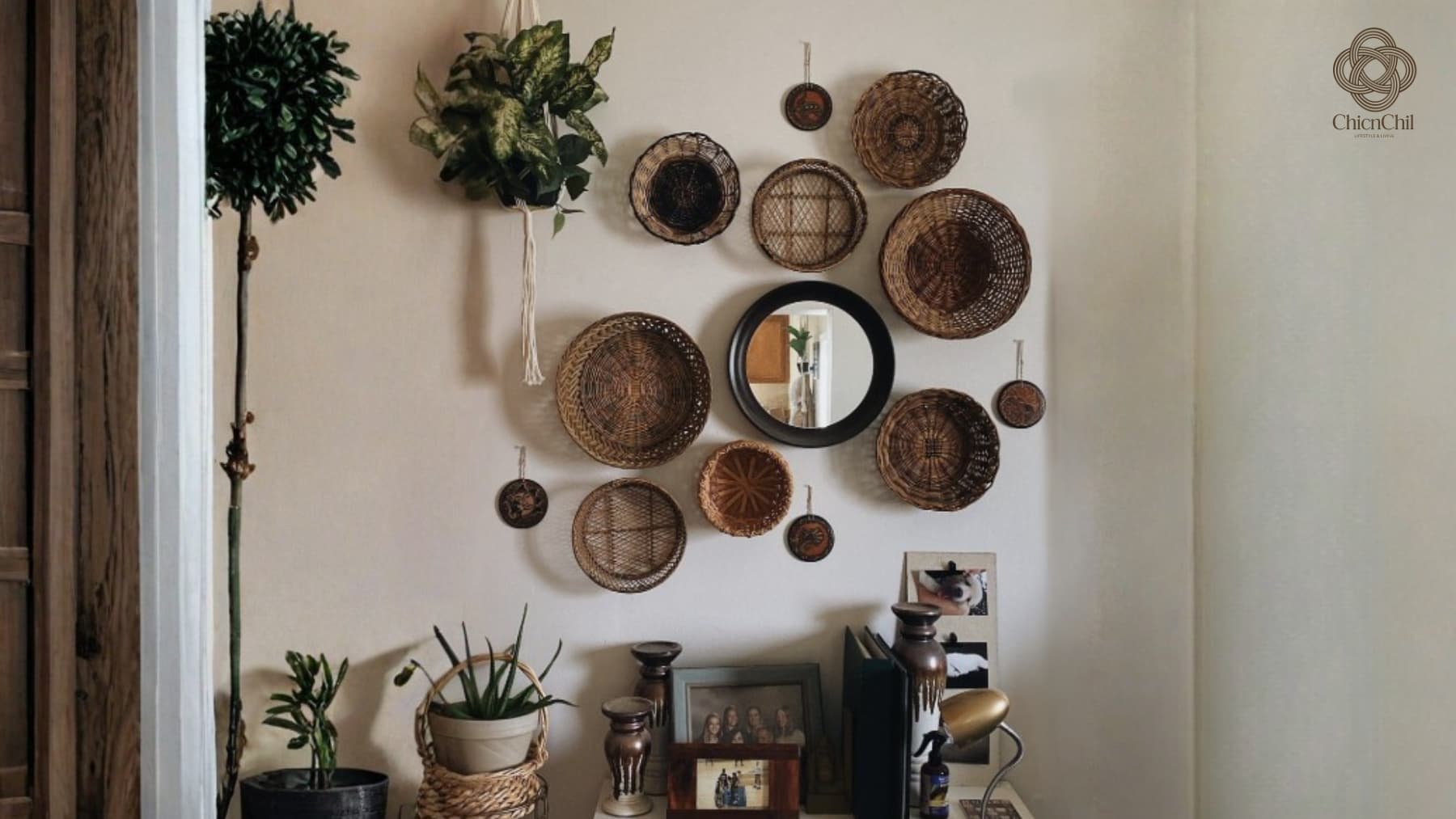
Bamboo and Rattan: Offering intricate textures and a lightweight, airy feel.
-
Solid Wood: Providing warmth, durability, and a sense of history through its grain.
-
Linen and Jute: Softening the acoustic and visual edges of a room.
-
Clay and Stone: Bringing an elemental, grounded presence to the wall.
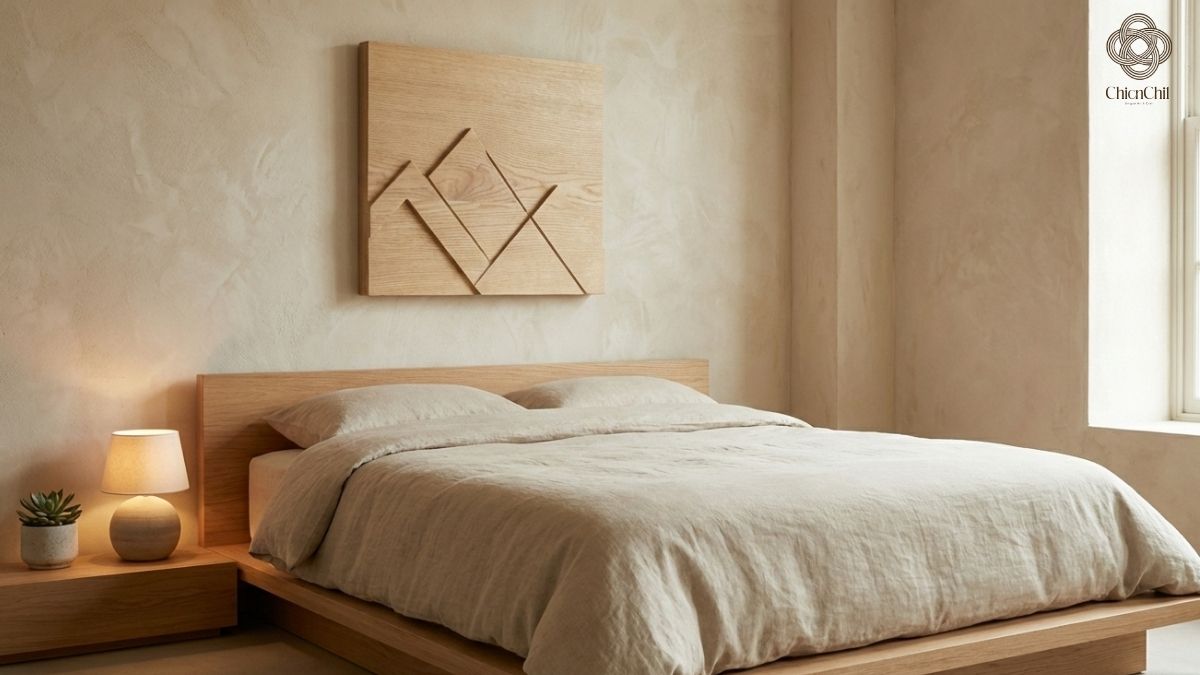
These materials allow walls to feel breathable. Unlike synthetic decorations, natural wall decor ages gracefully. Over time, wood deepens in color and woven fibers settle, creating a story of "lived-in" beauty that mass-produced items simply cannot replicate.
The quiet power of minimalist handmade art
Why does handmade wall decor feel so different from something off a factory line?At the core of the piece is the maker’s touch, shaping both its form and character.. Each piece of minimalist handmade art carries subtle variations in texture, tone, and form. These are not flaws; they are the language of the artisan.
This aligns perfectly with Wabi-sabi thinking, where beauty is found in the natural cycle of growth and decay, and in the marks of the maker. A slight irregularity in a bamboo weave or an uneven wood grain reveals a soul behind the object. This human connection is what makes a house feel like a home.
In a Japandi inspired decor setting, these pieces reveal themselves slowly. They don’t shout for attention the moment you enter a room. Instead, they invite closer observation as the light changes throughout the day, offering a new shadow or a hidden detail to those who take the time to look.
Lear more: https://chicnchill.net/blog/eco-friendly-wall-decor-sustainable-handmade-art-for-conscious-homes
Styling your space: letting the walls breathe
Styling within the Japandi aesthetic is less about following strict rules and more about developing a sensitivity to balance. To achieve the perfect Japandi interior style, consider the following approaches:
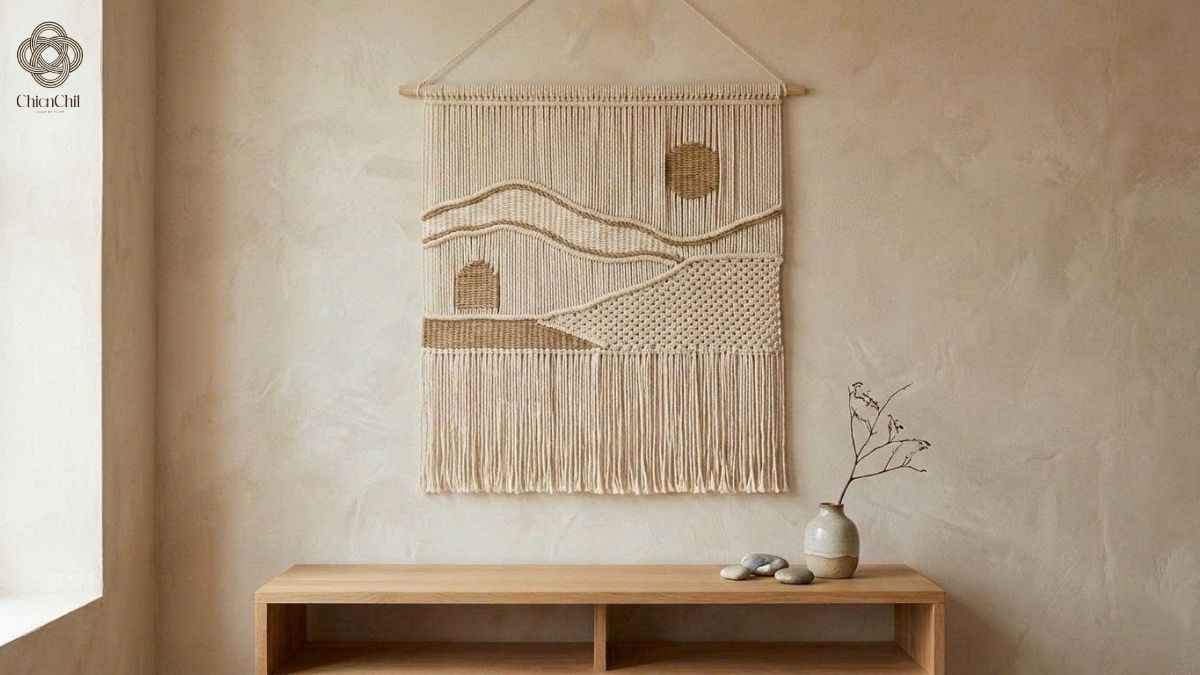
Embrace Negative Space
Negative space (the empty area around an object) is essential. Leaving room around each piece of minimalist wall decor allows the eye to rest and the object’s texture to be fully appreciated. Walls feel calmer when they are not filled edge to edge.
Prioritize Texture Over Color
If your walls are neutral, use texture to create interest. A piece of handmade wall decor with a rich, woven surface or a carved wooden relief adds depth without needing a bold color palette. Soft neutrals like warm oak, off-white, muted beige, and gentle gray are the hallmarks of this style.
Intentional Placement
Japandi wall decor feels most natural in areas associated with slower moments. Think of the wall behind your bed, a quiet reading nook, or the hallway that leads to your sanctuary. Placing art near natural light sources allows the subtle textures to shift and dance as the sun moves.
Asymmetry and Balance
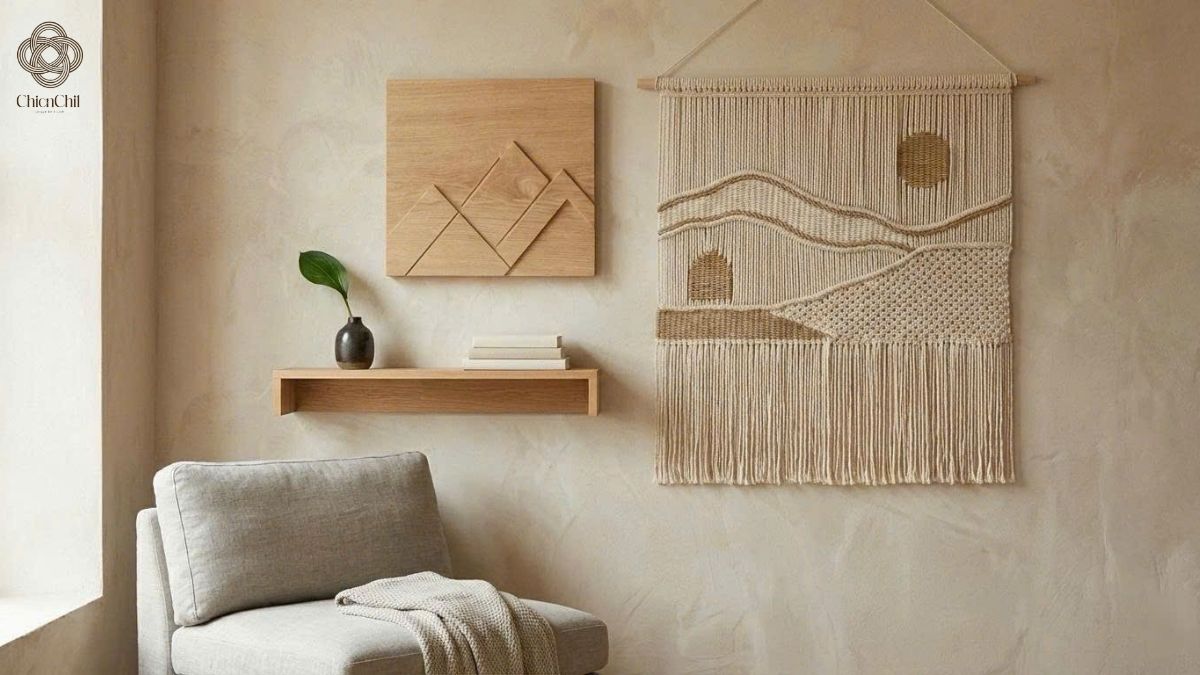
Rather than a perfectly symmetrical gallery wall, try a single, large-scale piece of minimalist handmade art or a loosely arranged grouping of three. Balance, not precision, is what gives this style its quiet, effortless strength.
A piece that transitions easily between different design moods
One of the greatest strengths of Japandi home decor is its incredible flexibility. While it is rooted in a specific philosophy, its clean lines and natural materials allow it to adapt easily to various settings:
-
In Minimalist Homes: It prevents the space from feeling too stark or cold by adding "soul" through handmade textures.
-
In Coastal or Boho Interiors: It brings a sense of structure and sophistication to organic, flowing spaces.
-
In Scandinavian Homes: It introduces a touch of Zen-like discipline and warmth.
This adaptability explains why natural wall decor is a favorite in Chicnchill lifestyle settings. It doesn't define the room too strongly; instead, it supports the existing mood, making it a timeless investment for any evolving interior.
Practical considerations for handmade decor
Before choosing your handmade wall decor, it is important to understand the nature of artisanal products. Because each piece is crafted by hand, slight variations in size and color are to be expected-and celebrated.
-
Longevity: Materials like bamboo and wood are durable but can be sensitive to extreme humidity or direct, harsh sunlight over long periods.
-
Color Harmony: Soft neutrals and natural shades tend to integrate more easily into your home and remain aesthetically pleasing as your style evolves.
-
Sustainability: Choosing natural wall decor often means supporting sustainable harvesting and traditional crafting techniques, aligning your home with eco-conscious values.
Conclusion: a meaningful choice for a mindful home
Japandi wall decor offers a gentle way to shape a balanced living space. By combining the best of natural materials, thoughtful craftsmanship, and intentional restraint, it supports your everyday life without overwhelming it.
Whether you are looking to transform a bedroom into a sleep sanctuary or add a touch of warmth to a modern living area, minimalist handmade art provides the emotional grounding we all seek. For those drawn to a lifestyle that values feeling over display, Japandi inspired decor remains a meaningful and lasting choice-one that settles a space rather than simply filling it.